For some people, a car is just a machine or a way to get from point A to point B. For others, like Matthew Mirabal, it’s a gateway to something much bigger and more human: connection.
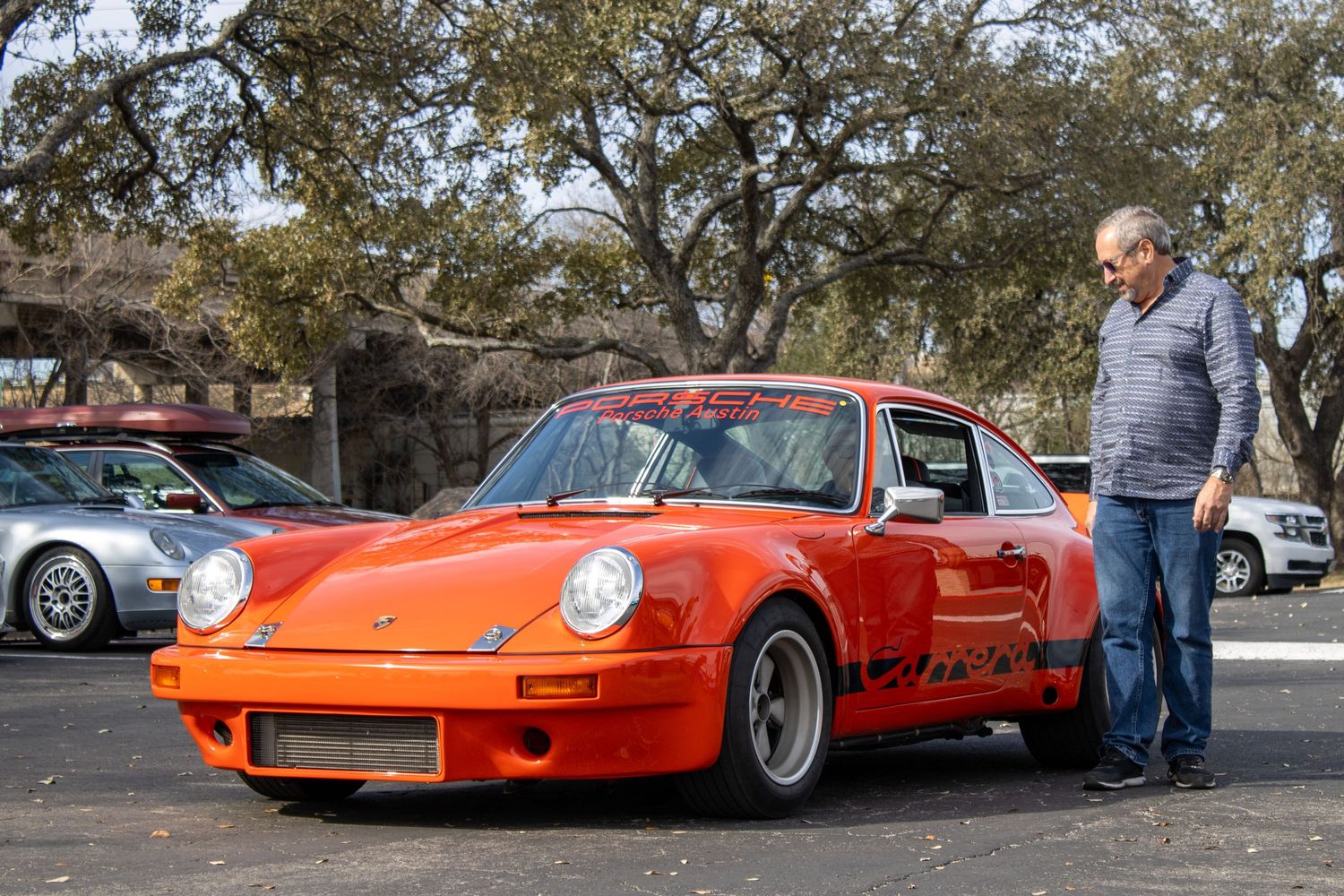
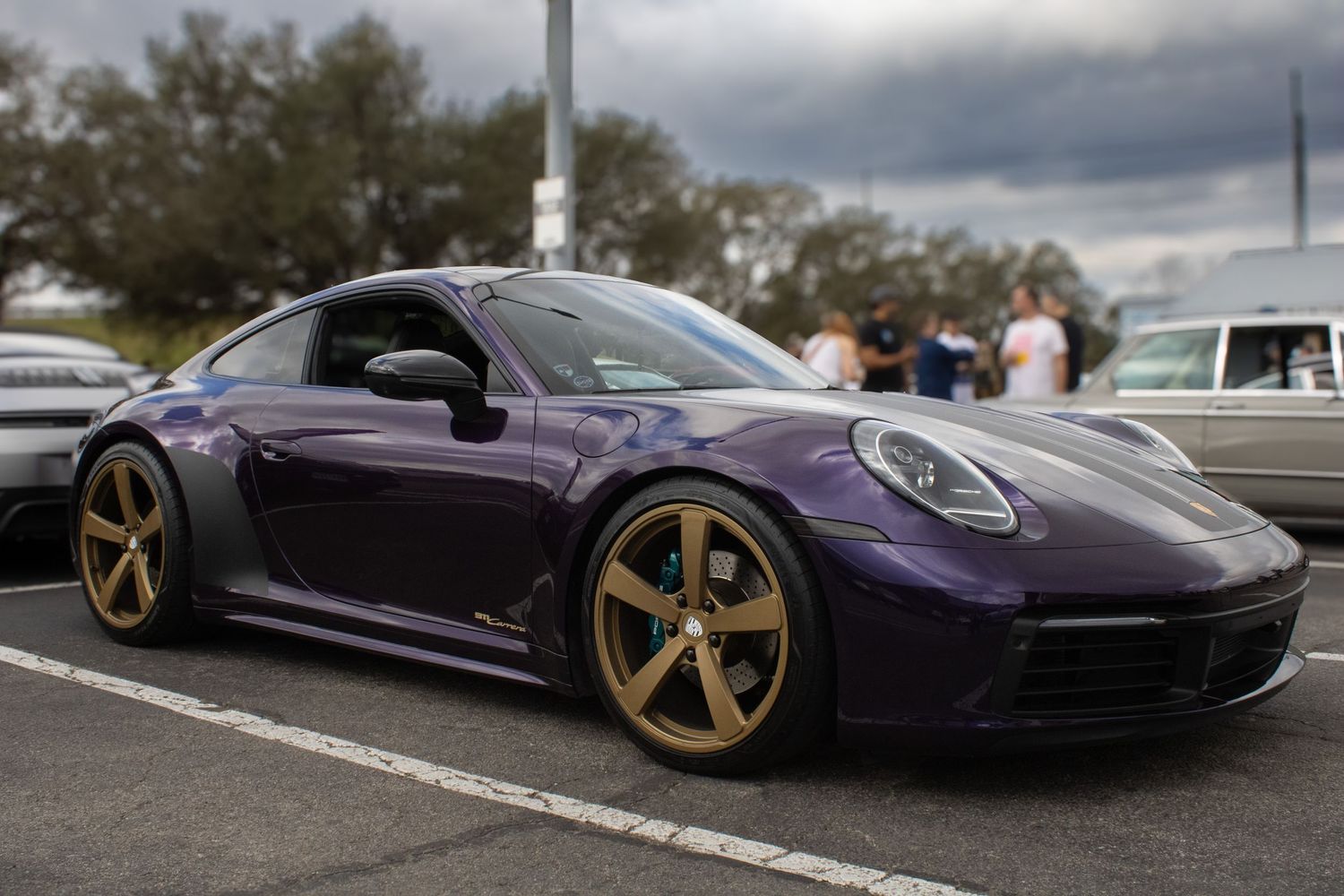
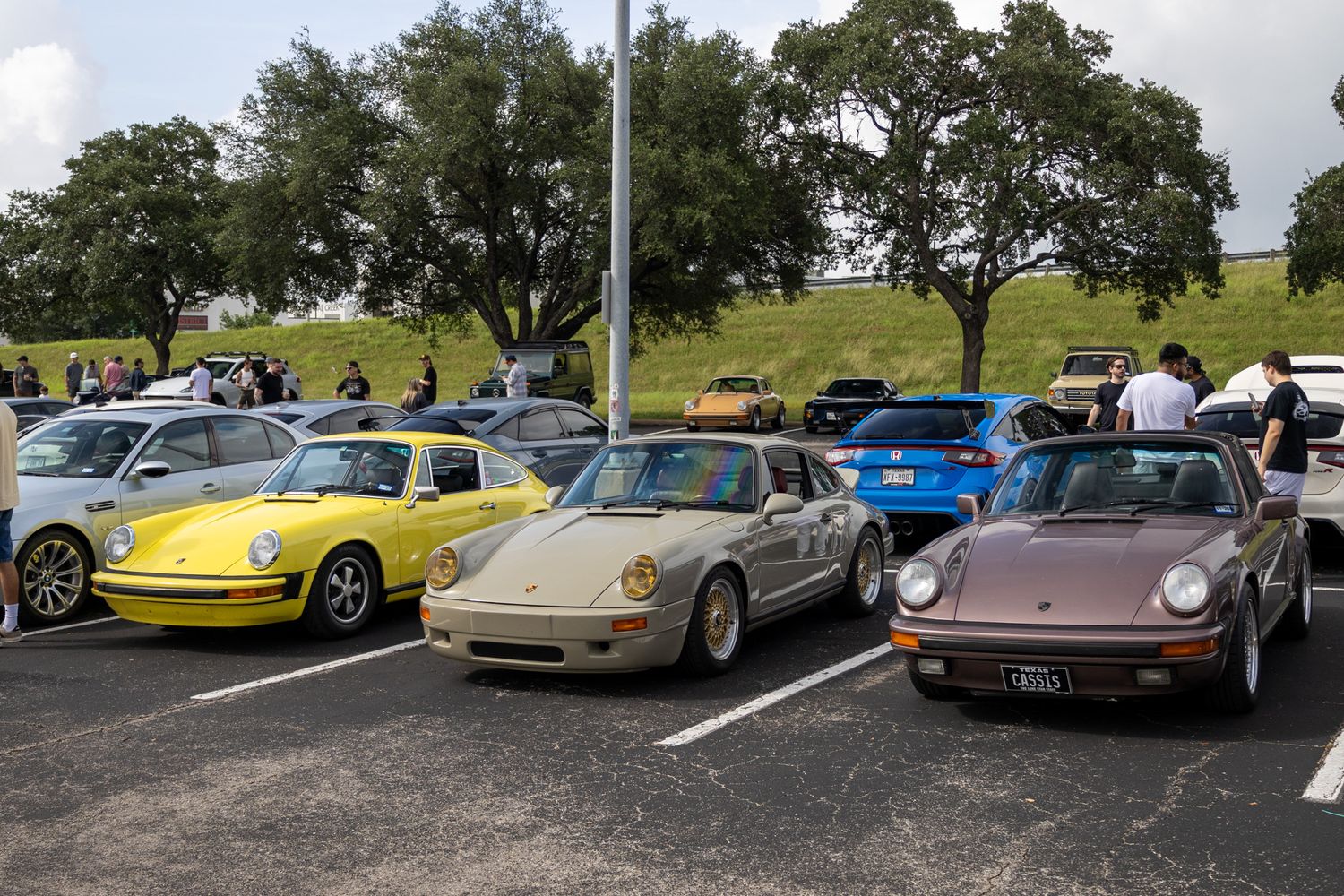
Every Sunday morning at 9 a.m., cars slowly begin to trickle into an empty parking lot in north Austin. First, a bright orange 1973 Porsche 911. Then, a brand-new dark blue Porsche 911, dealer plates still attached, followed by a quirky ‘80s-era Porsche 944. More Porsches from every decade and of every model, in every color of the rainbow, arrive and park next to each other.
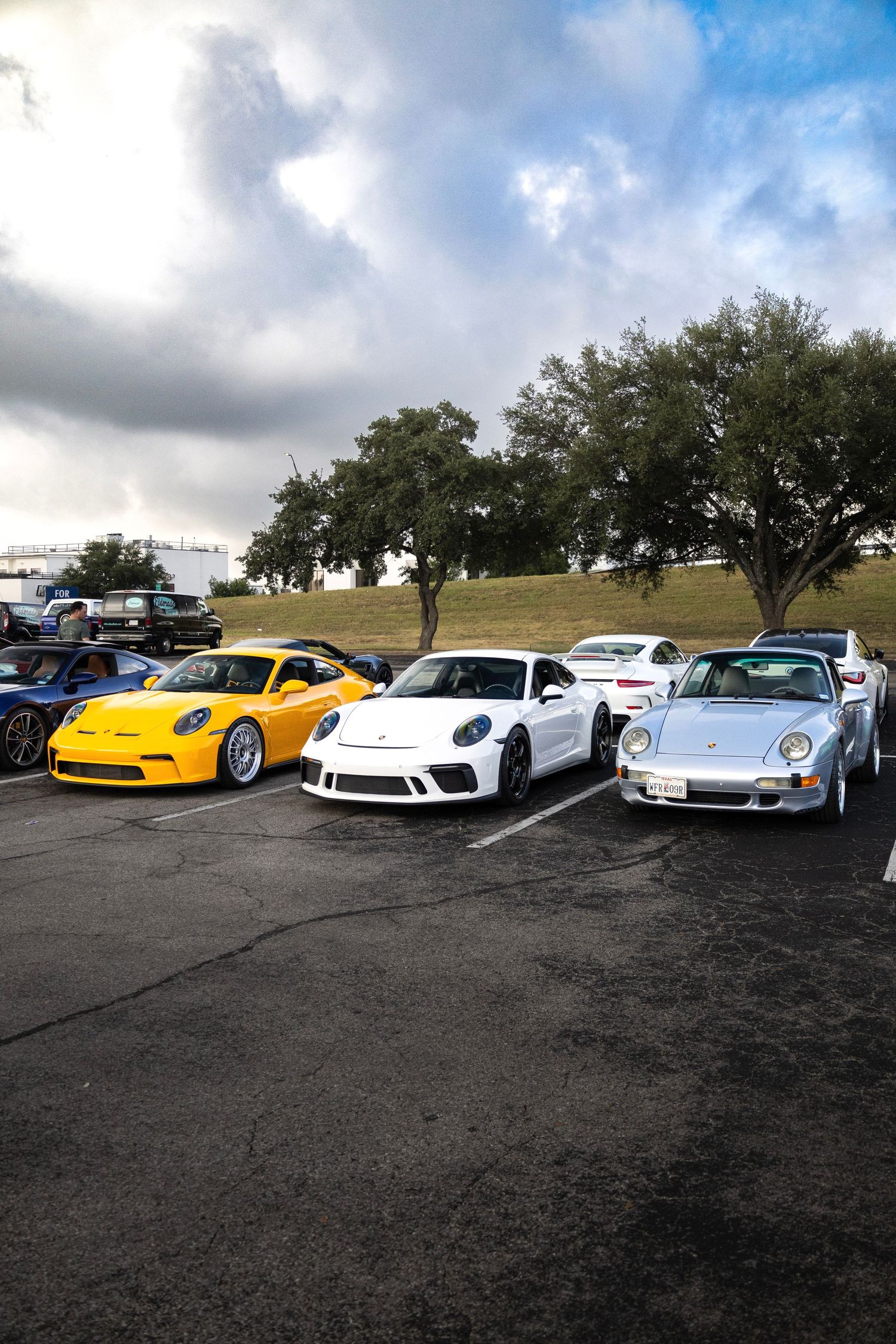
With each passing Sunday, new cars dot the lineup of Porsches – a sleek Lamborghini, a crew of Nissan Skylines that could be straight out of a Gran Turismo or Need for Speed video game, a couple of classic red Ferraris, and occasionally something rare that only a few enthusiasts identify, sparking chatter that spreads throughout the parking lot.
Before Morning Motors was Morning Motors, it was simply Matt Mirabal and a few friends meeting for coffee and a Sunday morning drive in their Porsches. For a couple of years, there was no name, no Instagram page, and no intention of making it anything more.
“Some individuals started reaching out to me after seeing pictures on social media and asking, ‘Hey, could I join?’” Mirabal said. “I initially kept it super tight with just the five of us, but eventually we decided to open it up and let more people come.”
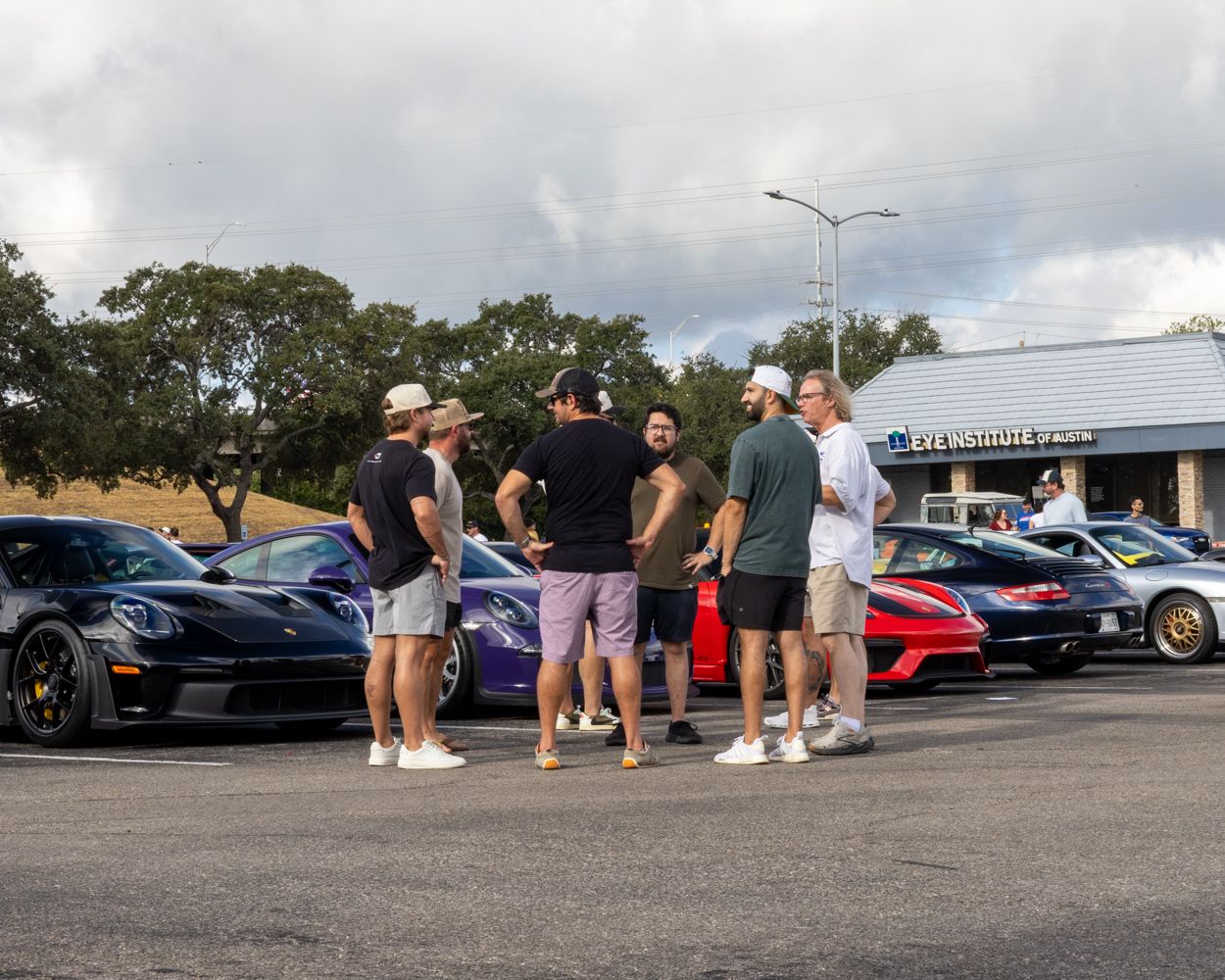
What started as a few friends who were Porsche enthusiasts has blossomed into a Sunday-morning spectacle—dozens of unique cars of all kinds packed into a small parking lot shared during the week by a swimming school, an optometrist, a yoga studio, and a coffee shop.
“Right now, we get between 100 and 130 cars every Sunday morning, so the growth has been absurd. This was never my intention at all, and it kind of grew beyond just me,” Mirabal said. “What I envision is that it's just a good place for people first, cars second.”
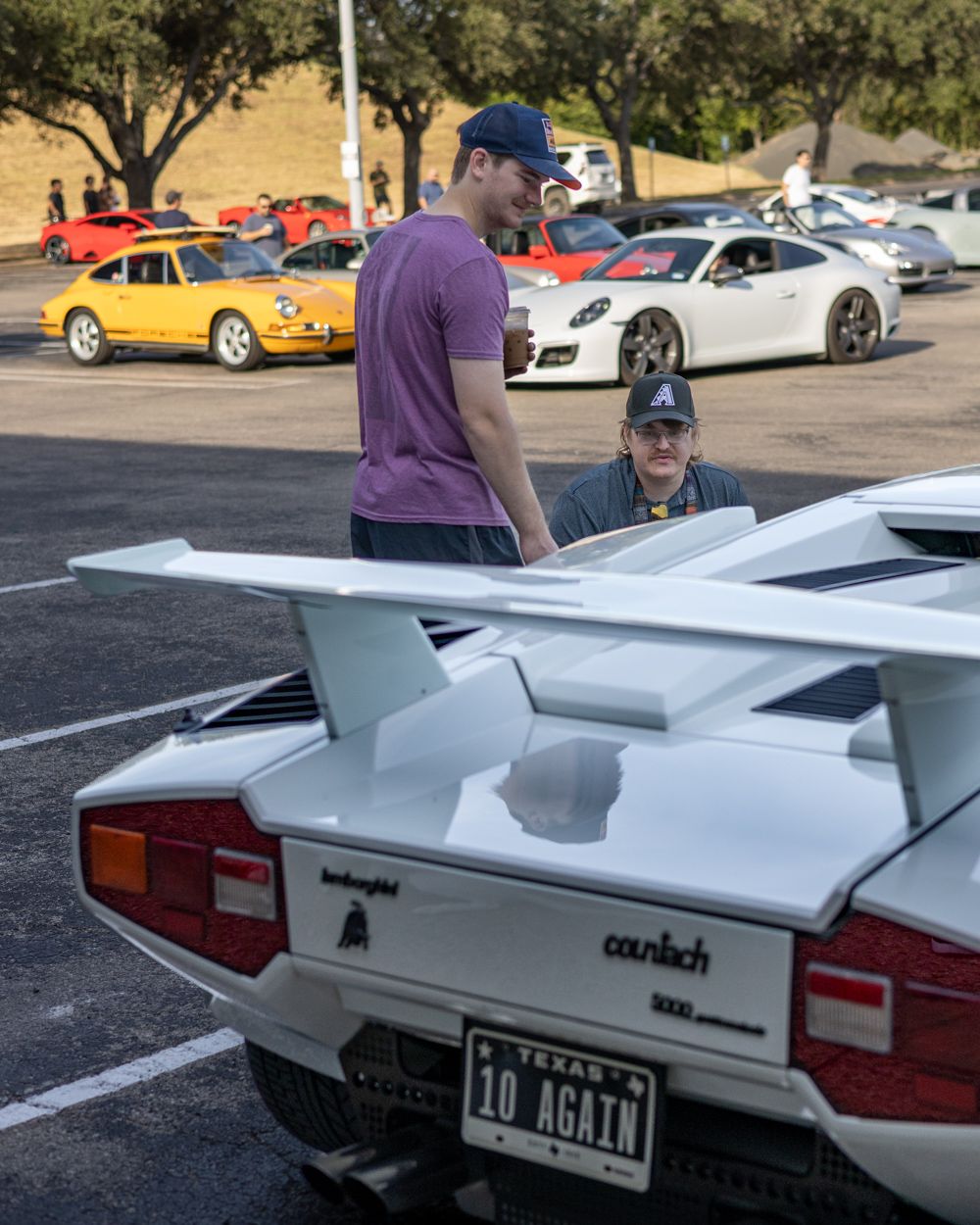
The cars draw people in and get their attention. One week, the star might be a $1.5 million Porsche Carrera GT, one of just 1,270 produced, according to Porsche. The car is famous for its rare combination of a V10 engine and manual transmission—and, outside enthusiast circles, as the car in which Fast & Furious actor Paul Walker lost his life. The next week, the star is an even rarer 1980s Lamborghini Countach LP500S—one of just 321 produced, according to The Lamborghini Registry—instantly recognizable by its retro-yet-futuristic wedge shape and signature scissor doors.
Another week, or even just two parking spots down on the same Sunday, the attention might be on a tiny, unassuming, sun-faded 1990s Honda Beat with zebra print seats. A sign in the window indicates it’s for sale for a literal fraction of the cost of its neighboring cars, but it’s priceless to an enthusiast.
The Honda Beat was only made for the Japanese market from 1991 to 1996, meaning U.S. buyers must import them. Under the Imported Vehicle Safety Compliance Act of 1988, foreign vehicles must meet U.S. safety and emissions standards, but become exempt from those requirements after 25 years. According to Whip Jury, only 33,635 Honda Beats were produced, and it was the last car to be approved by Honda founder Soichiro Honda before his death in 1991. Despite its relative rarity, Honda Beats go for an average of roughly just $8,000 on Cars & Bids, a popular automotive auction site.
That’s the magic of Morning Motors. You don’t have to have the most expensive or flashiest car in the lot. Though it began as a Porsche meet, there’s no single definition of which cars belong. A pristine, million-dollar collector’s car is just as welcome as a slightly rusty, cheap cult classic.
“Cars can be status symbols, and car culture certainly has its share of ego. From the outside, it's easy to see a parking lot full of expensive cars and assume that's the whole thing,” Andrew Smith, a regular attendee of Morning Motors, said. “What you don't see is two people with completely different jobs, backgrounds, and lives standing around for an hour talking about some stupid little mechanical detail. Or somebody helping another person figure out a problem with their car. Or friendships that started because two strangers happened to park next to each other.”
Smith began attending after another friend with a Porsche connected with Mirabal. Unlike many car meets, Morning Motors isn’t plastered across local Facebook groups with an AI-generated flyer. Invites come by word of mouth or an Instagram DM from Mirabal, with the time, date, and location on a real photo taken by a real attendee.
That relative exclusivity is intentional. By keeping the meet somewhat low-profile, Morning Motors has developed its own unique culture.
“I think it skews a little bit more mature,” Mirabal said. “People are more reserved rather than trying to be complete show-offs and coming out of the parking lot just driving extremely fast.”
For Mirabal, one of the clearest signs that Morning Motors had grown beyond a typical car meet was when he brought his son.
“The first time I brought my son out, I think that’s when I sort of saw [Morning Motors] as a little bit different,” he said. “Then other people started bringing their own kids out and putting them in their cars that are typically not traditional family cars.”
What had started as a few friends with Porsches quickly grew into something that extended beyond the cars themselves.
“It’s more family- and people-centric rather than car-centric,” Mirabal said.
That philosophy is apparent every Sunday. If someone’s car breaks, someone else helps. If someone isn't sure which shop to trust with their exotic car, someone has a recommendation. But the conversations don’t stop there.
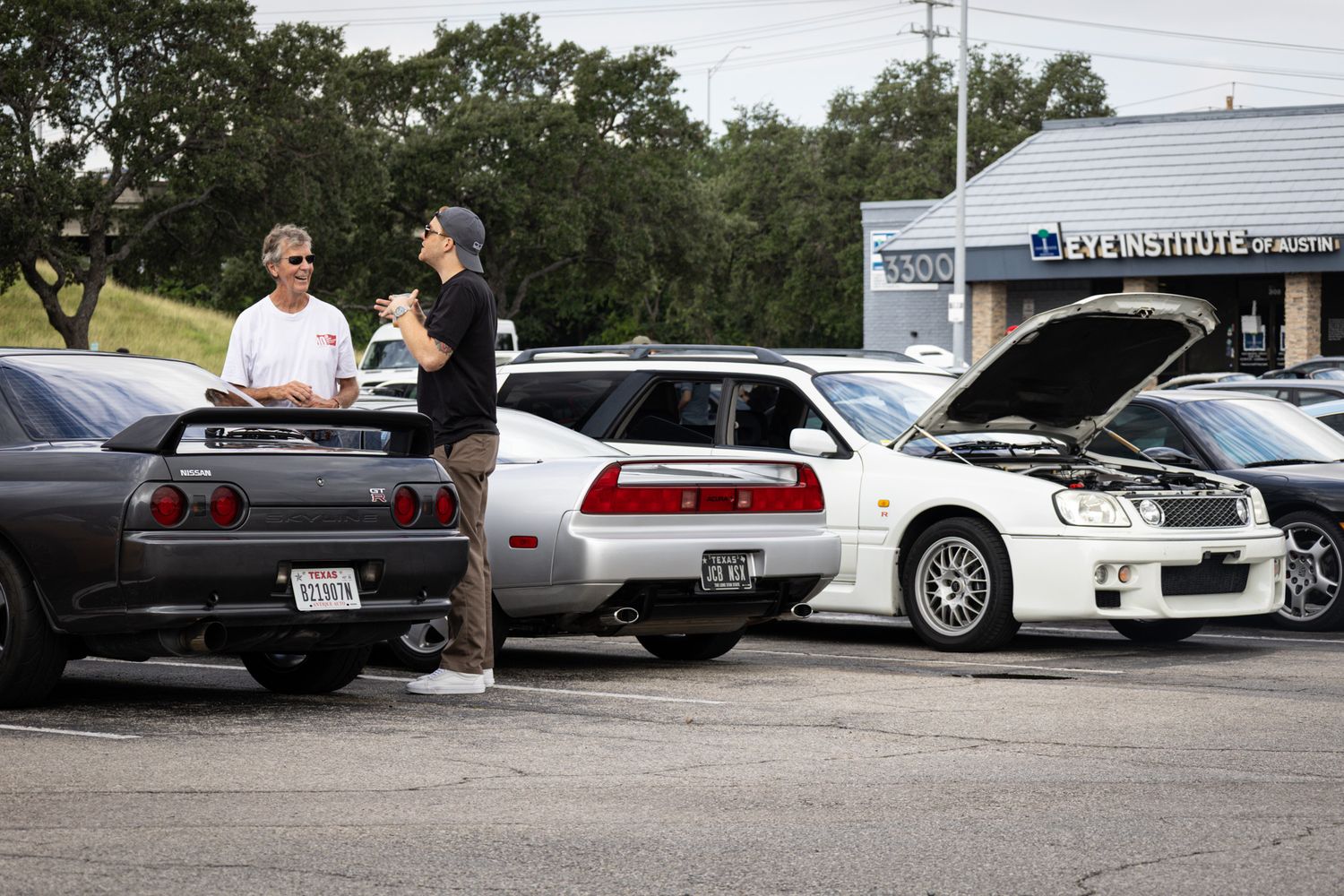
“I care more about, like, what you do over the weekend, your week, how your kids are doing, how your vacation is going, what’s going on in your life,” Mirabal said. “Yeah, I think that’s the conversation when you walk around. Sometimes cars come up, obviously, but it’s really more about the human factor of it.”
But why do cars have such a strong ability to bring people together?
“Cars give you permission to talk to people. Normally, you don't walk up to a complete stranger and start asking them questions about themselves,” Smith said. “But you can walk up and say, 'What wheels are those?' and suddenly you're having a conversation.”
For Smith, that conversation is what makes attending Morning Motors better than solo Hill Country drives or scrolling car photos on social media.
“Here, you get the story. It could be why someone is driving this car, or why someone chose that car, or even ideas to consider for your car. That's the part you don't get from Instagram,” Smith said.
The cars may initially draw people to Morning Motors, but the owners and their stories keep them coming back.
“Morning Motors, of course, provides the opportunity to see other similar cars but, more importantly, to meet different people with a similar interest,” Smith said. “Pretty quickly, the cars become the excuse to attend rather than the reason.”
For Eddie Vercetti, a car photographer and Morning Motors regular who moved to Texas from New York five years ago, cars' special ability to connect and spark conversations has been especially meaningful. Morning Motors has helped him build a community and life in Austin.
“Cars are an amazing connector for a lot of people who otherwise probably wouldn’t even care about each other on the street,” he said. “You could just talk with somebody and strike up a conversation, and you will go on for hours talking about other things or cars in general.”
Through those conversations, Eddie has met new people, turned his passion for car photography into a small source of income, and made lifelong friends.
“My favorite thing about Morning Motors is not only seeing something really cool or rare but also being able to take a photo that looks just as great. A really cool car needs to be a really good photo as well,” Vercetti said. “I think these cars, with the design language and all the engineering that gets put into them, they're very, very special. They're about as close to life as humans have ever been able to create.”
True to the people-first culture of Morning Motors, when it’s time for someone to sell their car in preparation for their next car, there’s always a photographer like Vercetti willing to take their listing photos.
“It's led to a couple of really good opportunities for me, a few private shoots here and there. It's translated into a little bit of money in the pocket, but it's also led to some of the greatest friends that I have out here in Texas,” said Vercetti. “I couldn't imagine what my life would be like if I wasn't into cars and I didn't go to these car meets."
For Mirabal and Morning Motors attendees, that statement resonates. Cars build community. What started as a few friends enjoying their cars and a cup of coffee turned into dozens of people building friendships over cars and coffee.
“Friends. Tons and tons and tons of friends,” Mirabal said when asked what he has gained most from hosting the meet.
“This hobby has a very shallow start, like with the material possession. But you have long-lasting, deep relationships that can develop from it. That is what I have gained the most: meeting people, understanding their families, and bringing them out every single Sunday.”
“I think cars are really great for bringing people together and starting the conversation,” Mirabal said, “but that’s not where it ends.”